- VPN
- VPN Services
New laws and sophisticated blocking techniques are making VPN use in Russia increasingly difficult
When you purchase through links on our site, we may earn an affiliate commission. Here’s how it works.
 (Image credit: Getty Images)
Share
Share by:
(Image credit: Getty Images)
Share
Share by:
- Copy link
- X
- Threads
The Kremlin's quest to build a national, closed internet intensified last year.
Russia's censorship body, Roskomnadzor, blocked 1.3 million web pages in 12 months, according to recent data. That's a 59% increase compared with the previous year.
You may like-
 "Another wave of VPN blocks:" Windscribe records drop in traffic in Russia
-
 Beyond VPN protection – how NordVPN changed in 2025, and what’s in store for 2026
-
 Russian restrictions have been blocking access to Telegram and WhatsApp for months – here's what we know
2025: a "particularly challenging" year
Last year was "particularly challenging," according to Mazay Banzaev, Founder of Russia-based Amnezia VPN.
Banzaev explained that, currently, most VPN protocols are blocked in the country. "At present, only VPN protocols that disguise themselves as other network protocols continue to function," he said.
The likes of XRay (VLESS, VMess, Trojan), NaiveProxy, and Hysteria generally still work, though he warned that they could be blocked if "poorly configured."
The escalation comes as Russian censors continue to refine their DPI-based filtering systems, growing their reliance on AI and other sophisticated traffic analysis methods.
Over the summer, Roskomnadzor almost completely blocked unidentified UDP traffic. This prompted the team at Amnezia to upgrade its censorship-resistant AmneziaWG protocol. "Overall, it operates stably, though the regulator periodically blocks its signatures, necessitating regular updates," Banzaev said.
The filtering model, however, is designed for protecting the "legitimate" use of VPNs. Banzaev explains that Roskomnadzor uses whitelisting techniques to ensure that selected organizations can still use their business VPN. "All other companies and services face the same problems as ordinary users," he added.
You may like-
"Another wave of VPN blocks:" Windscribe records drop in traffic in Russia
-
Beyond VPN protection – how NordVPN changed in 2025, and what’s in store for 2026
-
Russian restrictions have been blocking access to Telegram and WhatsApp for months – here's what we know
Popular VPNs struggle to work
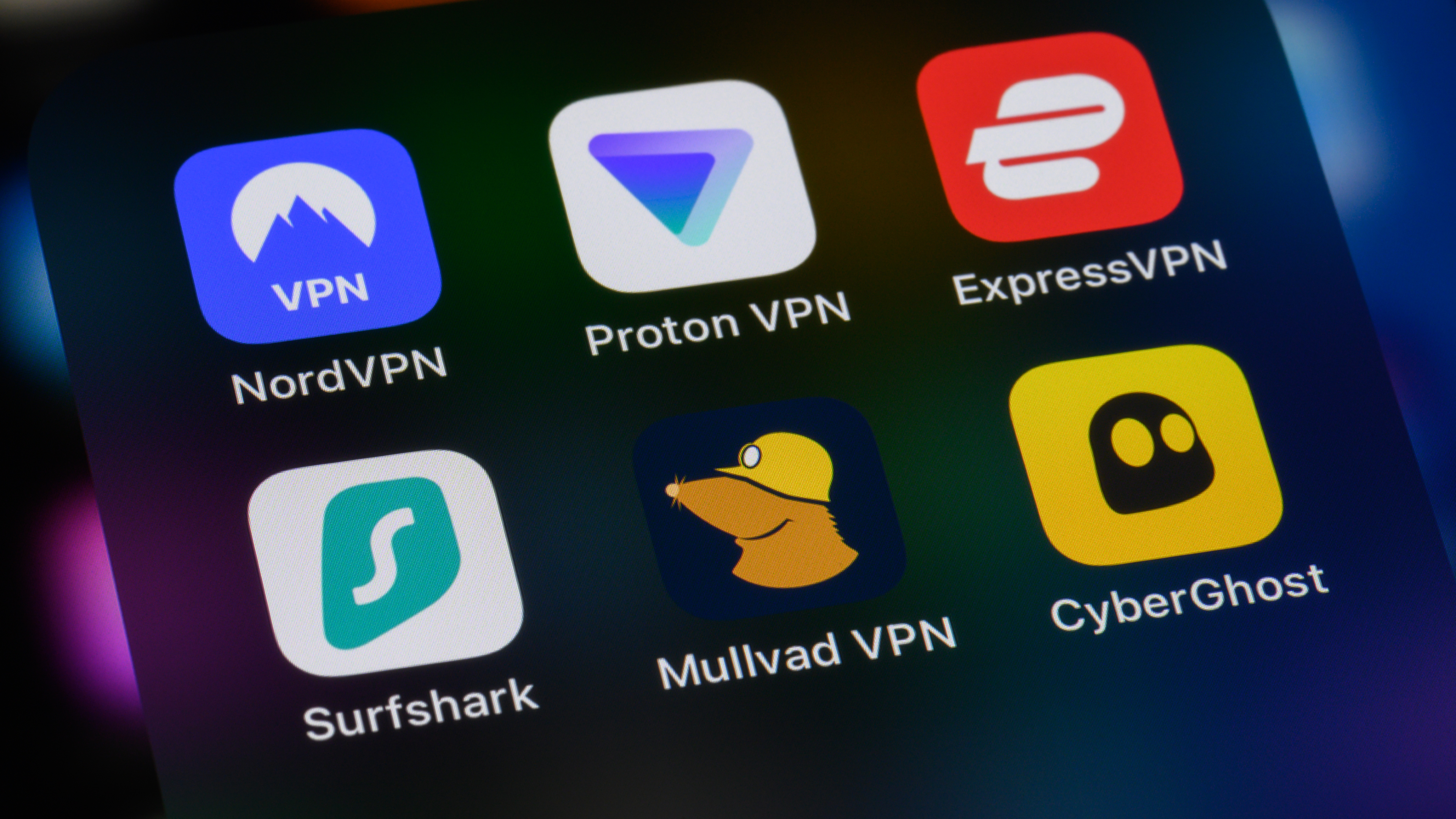
Banzaev claims that popular Western VPN services such as NordVPN, Proton VPN, and ExpressVPN are "effectively non-functional" in the country.
A spokesperson for NordVPN confirmed to TechRadar that the service does not operate in the region and has "no plans to return under the present circumstances." The provider was also among those that pulled its physical servers from Russia in 2019 following demands for data access, before exiting the market entirely after the 2022 invasion of Ukraine.
However, David Peterson, General Manager at Proton VPN, paints a slightly different picture. He explained that while the environment is challenging, the service still works for many users, though reliability varies "on any given day."
"Proton VPN's Stealth protocol is resistant to deep packet inspection (DPI). However, Russian authorities have also taken the additional step of blocking the IP addresses (and IP address ranges) of many VPN servers, meaning that multiple attempts may still be required to connect."
Similarly, an ExpressVPN spokesperson told TechRadar that connectivity in the region remains generally functional despite the difficulties.
"VPN connectivity can be challenging in some countries, and conditions can change over time. We continuously monitor network performance and work to maintain reliable access for users wherever possible," the company stated.
Despite these assurances, the situation remains volatile. On January 20, Windscribe confirmed a new wave of blocks, recording an almost 90% drop in Russian traffic.
Roskomnadzor as a "super-regulator"
The Kremlin's ability to restrict access to VPNs has significantly increased this year.
Thanks to the passing of Government Decree No. 1667 in late October 2025, Roskomnadzor is now capable of blocking content directly, rather than relying on telecom operators and ISPs.
Sarkis Darbinyan, a cyber lawyer and expert at RKS Global, said the agency has become a "super-regulator."
It can now "block virtually any service or application using DPI technology installed across all operators’ network nodes," Darbinyan told TechRadar.
Do you know?

Amnezia VPN is a self-hosted, open-source tool designed specifically to bypass state-enforced censorship. Its code is fully accessible, allowing anyone with the technical knowledge to independently audit its security.
This technical and legal escalation has coincided with an increased crackdown on websites that promote the use of VPNs and other circumvention tools.
According to the latest data, Roskomnadzor restricted access to 12,600 materials that “promoted VPNs” between January and April 2025 alone – twice the total for all of 2024. Pressure on Apple and Google to remove VPNs from their Russian app stores has also continued.
In July, lawmakers passed a law penalizing the search for 'extremist' content, introducing fresh fines for those accessing illegal material via a VPN. Experts described the move as "a new chapter in repressive internet regulation in Russia."
Alexey Kozliuk, Chairman of the industry group VPN Guild, told TechRadar: "While Russia does not yet have a formal ban on installing and using VPNs for citizens, as in Turkmenistan, the trajectory is clear."
What next for 2026?
While the push to migrate users to domestic applications like the Kremlin-backed "superapp" MAX is set to continue in 2026, experts believe that VPN blocking will only intensify.
It appears the state has the resources to back this ambition. According to Kozliuk, censors will have access to 60 billion rubles (~$780 million) between 2025 and 2027 "to strengthen VPN-blocking technologies."
Additionally, Forbes Russia reported that Roskomnadzor is set to allocate 2.27 billion rubles (~$29 million) to build an AI-powered traffic filtering mechanism designed to better detect and block prohibited content and VPN connections.
However, the battle against VPNs is not unique to Russia. The VPN Guild is increasingly concerned by the shifting narrative around circumvention tools in Western democracies, too.
That's why, according to the guild, the wider industry must unite to protect the legitimacy of these privacy tools.
"When a trend becomes global, the response must be global as well," said Kozliuk. "Participating in the 'Defend VPNs' Day of Action 2025 showed that the space for cooperation and knowledge sharing needs to be strengthened and expanded in 2026."
Follow TechRadar on Google News and add us as a preferred source to get our expert news, reviews, and opinion in your feeds. Make sure to click the Follow button!
CATEGORIES VPN Privacy & Security Chiara CastroSocial Links NavigationNews Editor (Tech Software)
Chiara is a multimedia journalist committed to covering stories to help promote the rights and denounce the abuses of the digital side of life – wherever cybersecurity, markets, and politics tangle up. She believes an open, uncensored, and private internet is a basic human need and wants to use her knowledge of VPNs to help readers take back control. She writes news, interviews, and analysis on data privacy, online censorship, digital rights, tech policies, and security software, with a special focus on VPNs, for TechRadar and TechRadar Pro. Got a story, tip-off, or something tech-interesting to say? Reach out to [email protected]
Show More CommentsYou must confirm your public display name before commenting
Please logout and then login again, you will then be prompted to enter your display name.
Logout Read more "Another wave of VPN blocks:" Windscribe records drop in traffic in Russia
 Beyond VPN protection – how NordVPN changed in 2025, and what’s in store for 2026
Russian restrictions have been blocking access to Telegram and WhatsApp for months – here's what we know
Beyond VPN protection – how NordVPN changed in 2025, and what’s in store for 2026
Russian restrictions have been blocking access to Telegram and WhatsApp for months – here's what we know
 I’m a VPN expert — these are the 3 things I want the industry to adopt in 2026
 Age verification changed the internet in 2025 – here's what it means for your privacy in 2026
 AI, age verification and censorship: how the VPN industry tackled 2025's biggest issues – and what it plans to do next
Latest in VPN Services
AI, age verification and censorship: how the VPN industry tackled 2025's biggest issues – and what it plans to do next
Latest in VPN Services
 AdGuard goes open-source with its custom VPN protocol that can mimic web traffic
 "In conclusion, the reviewed scope appears to be on a good security level compared to systems of similar size and complexity." — Independent review confirms Mullvad’s strong privacy protections
"Another wave of VPN blocks:" Windscribe records drop in traffic in Russia
"In conclusion, the reviewed scope appears to be on a good security level compared to systems of similar size and complexity." — Independent review confirms Mullvad’s strong privacy protections
"Another wave of VPN blocks:" Windscribe records drop in traffic in Russia
 How to download and use the IPVanish VPN app on Fire TV Stick
 NymVPN fixes bugs and boosts censorship resistance with latest update
 Proton VPN kills off legacy OpenVPN configs in push for better security
Latest in Features
Proton VPN kills off legacy OpenVPN configs in push for better security
Latest in Features
 I've rated all the key Samsung Galaxy S26 rumors
 The 3 biggest lies robot vacuum brands are telling us, by a professional tester
 Die My Love is streaming on MUBI now — here's your camera starter kit inspired by the movie
 NY Times Crossplay — the true story of how it was made
 The Pitt season 2 episode 3 makes Dana the shining star of the HBO Max show
 Have your say: do you actually use Apple Intelligence?
LATEST ARTICLES
Have your say: do you actually use Apple Intelligence?
LATEST ARTICLES- 1Russia’s battle against VPNs is entering a new phase: Here's what to expect in 2026
- 2ChatGPT's hidden creativity levers and how to flip them
- 3It might sound strange, but The Matrix is actually a happy movie — rewatch it to shake off the January blues
- 4Sigma 17-40mm f/1.8 DC | Art review: prime lens killer
- 5Hundreds of artists have made an anti-AI campaign that says ‘it’s theft’