.jpeg?width=1200&auto=webp&trim=167%2C365%2C655%2C365)
- News
- UK
- Home News
Peter Oakes faces the prospect of a underground pipeline passing through his Cheshire farm following years of uncertainty over plans for a HS2 line across his dairy fields
Alex Ross Saturday 24 January 2026 22:40 GMT- Bookmark
- CommentsGo to comments
Bookmark popover
Removed from bookmarks
Close popover.jpeg) open image in galleryPeter Oakes’ Park Farm near Middlewich in Cheshire, which could have an underground pipeline laid down through its land, not long after HS2 planned for a high-speed line across its fields (Supplied)
open image in galleryPeter Oakes’ Park Farm near Middlewich in Cheshire, which could have an underground pipeline laid down through its land, not long after HS2 planned for a high-speed line across its fields (Supplied)
Get the free Morning Headlines email for news from our reporters across the world
Sign up to our free Morning Headlines email
Sign up to our free Morning Headlines email
Email*SIGN UPI would like to be emailed about offers, events and updates from The Independent. Read our Privacy notice
A dairy farmer whose farm escaped being cut in half by the scrapped HS2 line now faces having a huge underground gas pipeline running through his land.
Peter Oakes told The Independent he felt like he was “pushing s*** uphill” after a letter arrived at his Cheshire farm to alert him to a proposed 300-metre-wide pipeline through his 160 acres of farmland.
The route is one of two options in the county being considered for the 120-mile underground line, which would take “captured” harmful carbon dioxide from cement and lime-making quarries in Staffordshire and Derbyshire to storage under the Irish Sea.
Peak Cluster would be the world’s largest cement decarbonisation project, and it received £28m from the government’s National Wealth Fund last year. Chancellor Rachel Reeves claimed it would modernise industry, create jobs and deliver “vital carbon capture infrastructure”.
But for farmers like Mr Oakes, whose farm, Park Farm, has been in his family for more than 120 years, the project presents another headache, after years of facing the prospect of an HS2 rail line going through his land.
And despite the Crewe to Manchester high-speed line being scrapped two years ago, much of his land remains under safeguarding measures, which means HS2 must be consulted on any development or sale to protect it from any future infrastructure.
Earlier this month, ministers announced long-term plans for a new Birmingham to Manchester railway, adding further uncertainty for landowners.
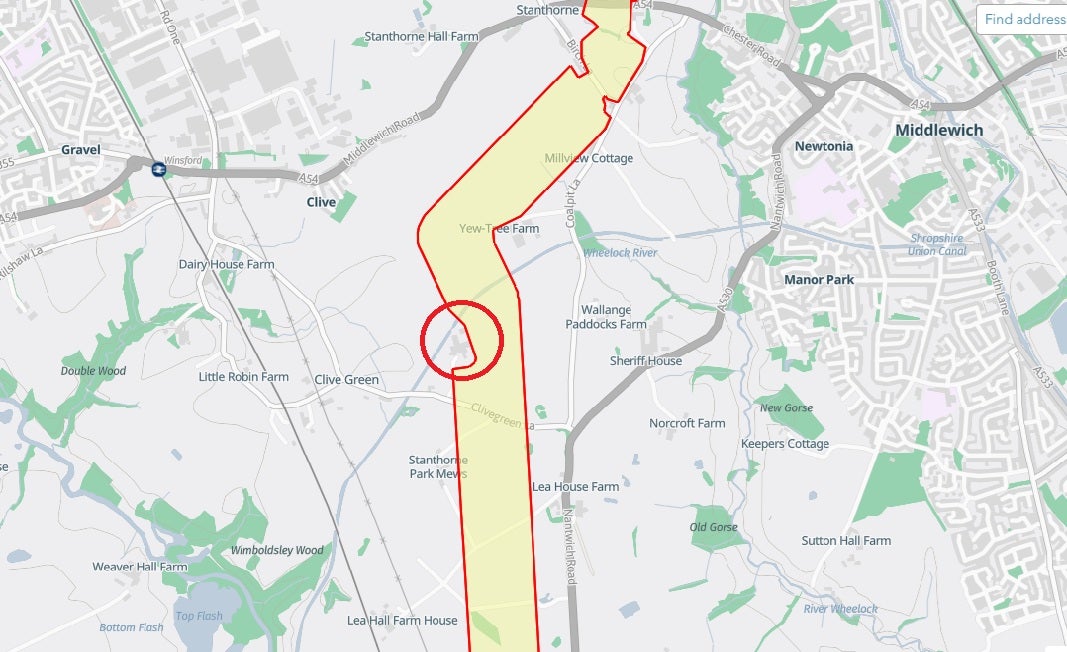 open image in galleryA map showing the 300-metre-wide corridor for the underground pipeline running past Park Farm (circled) and through its dairy farm land (Peak Cluster)
Meanwhile, Mr Oakes, like many dairy farmers across the country, said he was facing plummeting milk prices as well as the phased-out loss of EU-linked subsidies.
Mr Oakes, whose farm is near Middlewich and sits on the bank of the Shropshire Union canal, said: “It’s a real hard time for us all at the moment, so you can imagine how I felt when I got told they want to put down a huge underground pipeline across my land, it’s like “pushing s*** uphill” at the moment.
“There is very little support from the government for people like us who are having one thing after another thrown our way... and we’re expected to just get on with it. It’s distressing and causing hurt for the family. The last thing we now want is for our land to be dug up, really is it?”
HS2 has offered the 42-year-old more than £1m for the farm as part of a “statutory blight” process, which allows property owners in safeguarded areas to sell to the government. However, Mr Oakes said he has not been able to find another farm suitable to buy, and he is reluctant to sell due to his family ties to the land.
Now he faces dealing with Peak Cluster, the company behind the pipeline project, which started a consultation on the route of the pipeline this month.
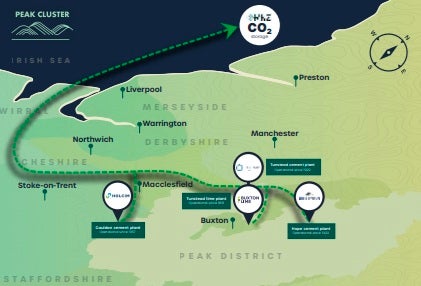 open image in galleryA graphic showing the route of the line from quarries in Derbyshire and Staffordshire to the Irish Sea (Peak Cluster)
Bosses have said the mapped plans show a 300-metre-wide pipeline corridor, but in reality, a width of up to 40 metres would be required for the laying of the pipe in a trench, with work typically lasting for six months.
They hope to strike voluntary agreements with landowners to allow the pipeline construction, but could seek to use compulsory powers if necessary. Following the current consultation, a further round will be done this year before a final decision on the plan is made by ministers within two years’ time.
John Egan, chief executive of Peak Cluster, said: “We have attempted to identify and contact all potentially affected landowners within the 300-metre-wide corridor of the proposed underground pipeline route.
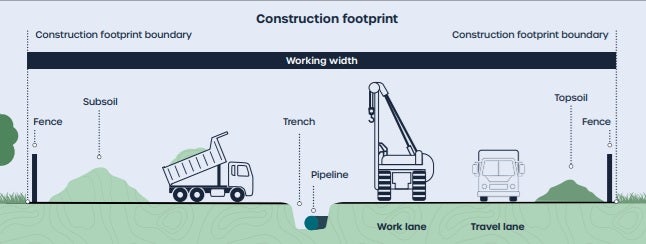 open image in galleryPeak Cluster says the working width for building the trench will remain open for as long as access along the pipeline route in that area is required, typically six months (Peak Cluster)
“We will be speaking to all landowners individually and will continue to engage as we develop our plans. We will attempt to reach [a] voluntary agreement with all landowners and will only seek to use compulsory access or acquisition powers where this is unsuccessful.
“After we have built the pipeline, we will reinstate agricultural land so farmers can use their land in the same way as they always have. We will also ensure that existing drains continue to flow. When construction ends, just as with other pipelines under our feet, the land will look and feel just as it did before.”
The Independent has contacted the Treasury for comment.
More about
FarmministersHS2CheshireCarbon DioxideJoin our commenting forum
Join thought-provoking conversations, follow other Independent readers and see their replies
Comments