- News
Iraq’s dominant political bloc has nominated former prime minister Nouri al-Maliki as its candidate for prime minister
Qassim Abdul-Zahra Saturday 24 January 2026 19:37 GMT- Bookmark
Bookmark popover
Removed from bookmarks
Close popover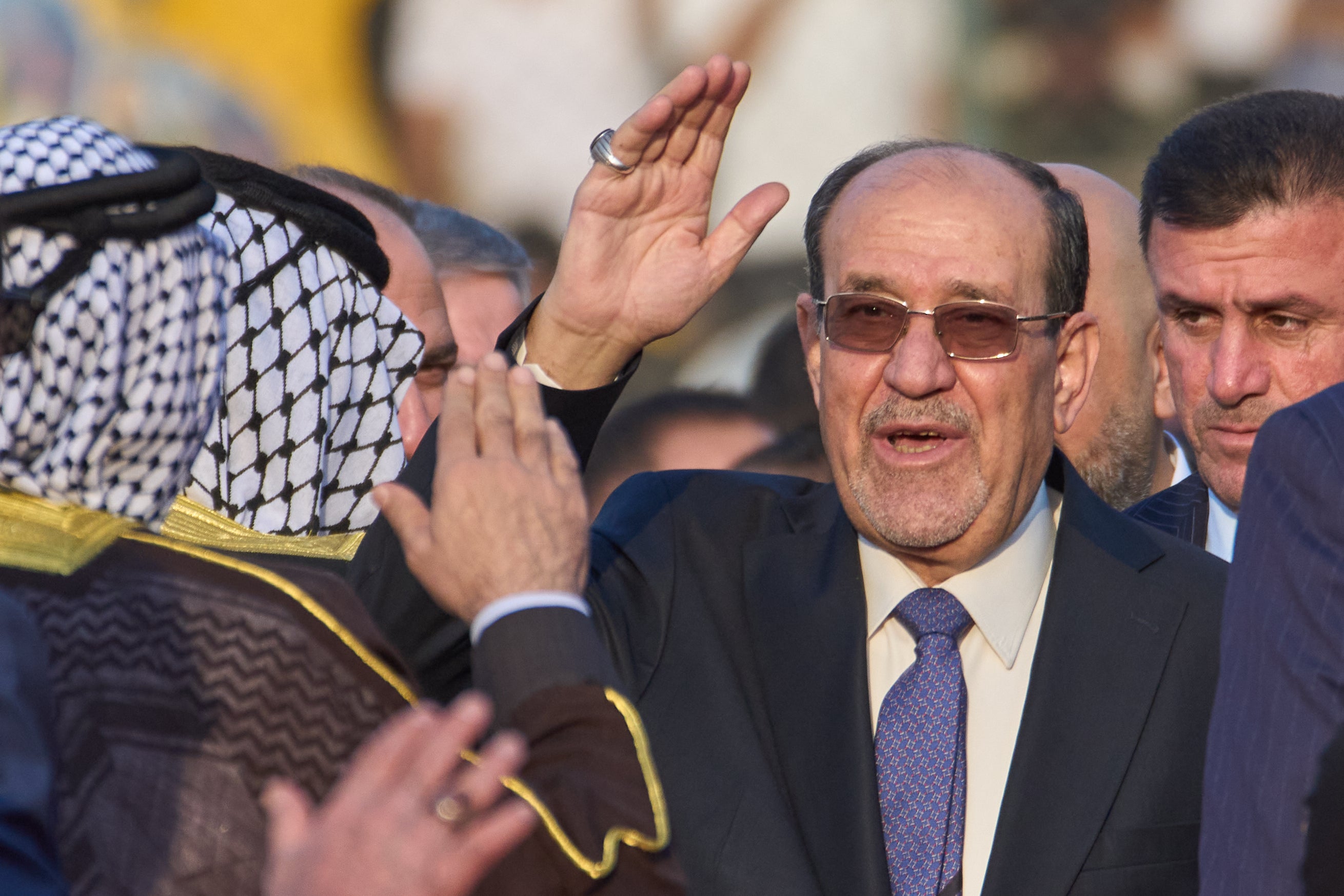 Iraq Prime Minister (Copyright 2025 The Associated Press. All rights reserved.)
For free real time breaking news alerts sent straight to your inbox sign up to our breaking news emails
Sign up to our free breaking news emails
Sign up to our free breaking news emails
Email*SIGN UPI would like to be emailed about offers, events and updates from The Independent. Read our Privacy notice
Iraq ’s dominant political bloc announced Saturday that it had nominated former prime minister Nouri al-Maliki as its candidate for prime minister.
The announcement came after caretaker Prime Minister Mohammed Shia al-Sudani, whose bloc won the largest share of seats in November’s parliamentary elections, stepped aside earlier this month. That cleared the field for al-Maliki after the two had competed for the backing of the Coordination Framework, a collection of Shiite parties.
Under Iraq’s constitution, a president is elected by the parliament, then names a prime minister, with the premier tasked with forming a new government.
The Coordination Framework called on the parliament to convene a session to elect the president. The bloc cited al-Maliki’s political and administrative experience in naming him as its preferred candidate.
Al-Maliki, who first served as prime minister in 2006, is the only Iraqi prime minister to serve a second term since a U.S.-led invasion toppled Saddam Hussein in 2003. His bid for a third term failed after he was accused of monopolizing power and alienating Sunnis and Kurds.
His selection now is likely to be polarizing, particularly among Iraq’s Sunni community.
Iraq’s National Political Council, a coalition of Sunni parties, in a statement called on the Coordination Framework to assume “historical responsibility” and warned against recycling leaders “whose past experiences have failed” to achieve stability or restore public trust.
However, the Sunni Azm Alliance, an influential Sunni party, rejected the council’s statement and voiced support for al-Maliki, highlighting a split within the Sunni political bloc over the nomination and reflecting broader political divisions in the country.
The next government likely will face heightened pressures from both the United States and Iran and will have to wrestle with the delicate question of the fate of non-state armed groups.
The U.S. has been pushing for Iraq to disarm Iran-backed groups — a difficult proposition, given the political power that many of them hold and Iran’s likely opposition to such a step.
Disarming the groups, many of which fought against the Islamic State group when it swept across Iraq a decade ago, is likely to face internal opposition amid heightened fears of an IS resurgence due to instability in neighboring Syria.
U.S. military on Wednesday said it started transferring some of the 9,000 IS detainees held in more than a dozen detention centers in northeast Syria to detention centers in Iraq.