- Home
Edition
Africa Australia Brasil Canada Canada (français) España Europe France Global Indonesia New Zealand United Kingdom United States Skip to content Edition:
Global
Edition:
Global
- Africa
- Australia
- Brasil
- Canada
- Canada (français)
- España
- Europe
- France
- Indonesia
- New Zealand
- United Kingdom
- United States
Academic rigour, journalistic flair
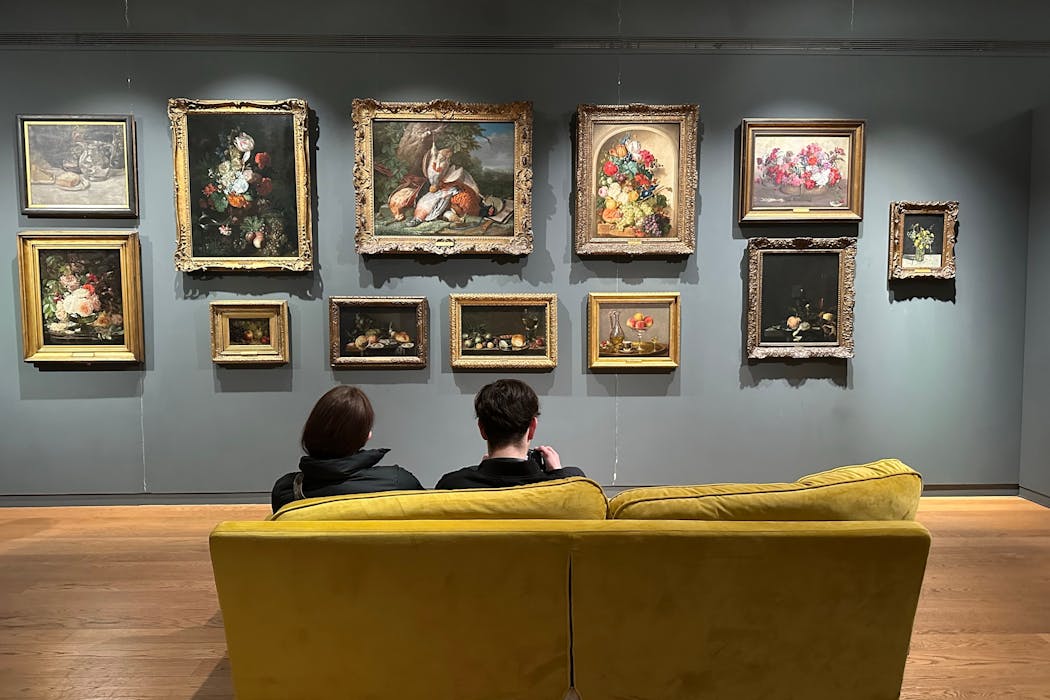
 Visitors enjoying Manchester Art Gallery.
Mark Saxby/Shutterstock
UK earmarks £1.5 billion in arts funding until 2030
– expert panel responds
Published: January 23, 2026 1.45pm GMT
Adam Behr, Newcastle University, Charlie Gregson, Nottingham Trent University, Wanja Kimani, University of the Arts London
Visitors enjoying Manchester Art Gallery.
Mark Saxby/Shutterstock
UK earmarks £1.5 billion in arts funding until 2030
– expert panel responds
Published: January 23, 2026 1.45pm GMT
Adam Behr, Newcastle University, Charlie Gregson, Nottingham Trent University, Wanja Kimani, University of the Arts London
Authors
-
 Adam Behr
Reader in Music, Politics and Socieity, Newcastle University
-
Charlie Gregson
Senior Lecturer in Museum Studies, Nottingham Trent University
-
Wanja Kimani
PhD Candidate in Fine Art, Chelsea College of Arts, University of the Arts London, University of the Arts London
Disclosure statement
Adam Behr has received funding from the Arts and Humanities Research Council and the British Academy.
Charlie Gregson has previously received funding from Arts Council England and National Lottery Heritage Fund, and subsequently worked as for Arts Council England.
Wanja Kimani does not work for, consult, own shares in or receive funding from any company or organisation that would benefit from this article, and has disclosed no relevant affiliations beyond their academic appointment.
Partners

Nottingham Trent University and Newcastle University provide funding as members of The Conversation UK.
View all partners
DOI
https://doi.org/10.64628/AB.6m6uked63
https://theconversation.com/uk-earmarks-1-5-billion-in-arts-funding-until-2030-expert-panel-responds-274230 https://theconversation.com/uk-earmarks-1-5-billion-in-arts-funding-until-2030-expert-panel-responds-274230 Link copied Share articleShare article
Copy link Email Bluesky Facebook WhatsApp Messenger LinkedIn X (Twitter)Print article
The UK government has announced a £1.5 billion funding package for the arts, which it says marks a turning point after a decade of underinvestment. Spread across five years from 2025 to 2030, the money includes £600 million for national museums and other organisations backed by the Department for Culture, Media and Sport. A further £160 million has been set aside for regional and local museums.
While many cultural leaders have applauded the move, others are more critical, pointing to UK National Audit Office reports that the culture department consistently underspends. We asked three industry experts to weigh in.
Wider support is needed
Adam Behr, Reader in Music, Politics and Society, Newcastle University
A £1.5 billion investment is welcome news for a sector buffeted by years of austerity and inflation (not to mention the long tail of pandemic shutdowns). But the devil is in the detail, as ever, and the wider context: definitions of “infrastructure” beyond the landmarks, and its relationship to cultural workers.
While the scale of this settlement is encouraging, it will need to support the wider cultural ecosystems in which headline assets sit. Culture is not a series of isolated institutions; it depends on networks of freelancers, grassroots venues and small organisations operating on tight margins. Many are reeling from rising costs, including increased employers’ national insurance contributions.
The policy ambition here, especially alongside growing recognition of the regions, is a clear step forward. But capital funding that stabilises national and regional flagships will be degraded if the surrounding ecology continues to thin out. Careful deployment of the Creative Foundations Fund for capital projects and Arts Everywhere Fund for local growth will be vital to ensure benefits flow throughout the system, supporting sustainable work and everyday cultural activity.
Consider the artists not just the buildings
Wanja Kimani, PhD Candidate in Fine Art, University of the Arts London
The £1.5 billion government commitment, particularly the £160 million for regional museums, is a vital lifeline. By addressing urgent infrastructure needs, this funding ensures the physical survival of museums and galleries after a decade of strain.
However, these spaces are more than buildings. They provide room to reconnect and reimagine our future, but this potential requires new ways of working that reflect our current reality. To truly serve communities, museums must be willing to interrogate the gap between intention and impact, becoming more experimental and open to new forms of collaboration.
Crucially, I question how this benefits artists, often the most precarious and underpaid members of the cultural ecosystem. For this significant investment to be truly effective, museums and galleries must actively create equitable opportunities, remove economic barriers for visitors and facilitate genuine community-rooted collaborations. We must invest in the people who inspire us, not just the assets that house them.
Questions remain
Charlie Gregson, Senior Lecturer in Museum Studies, Nottingham Trent University
The new funding aims to address foundational issues through its emphasis on repairing cultural venues and creating more sustainable business models. This directly responds to several pressing issues, particularly in context of the Arts Council England suggestion that they will be less prescriptive to artists and organisations and reduce grant administration.
Key details are not yet available, particularly regional distribution of funds, how recipients are prioritised and whether strategic initiatives will fill specialist skills shortages. Criticisms from the sector include lack of funding for core costs, with no news on the continuation of the funding stream for Local Authority museums facing a shortfall.
The funding represents potential opportunities to develop socially engaged decision-making. What happens when a site cannot be saved, what value do communities place in the asset and what might be the impact of radical new approaches such as “adaptive reuse or release” (giving a historic building a new purpose or managing its decay)? Developing such co-productive approaches could embed sustainability-led practice to create a leap in resilience that the funding seeks to achieve.

This article is part of our State of the Arts series. These articles tackle the challenges of the arts and heritage industry – and celebrate the wins, too.
- Museums
- Galleries
- Arts funding
- State of the Arts
- Government arts funding
Events
Jobs
-
 Lecturer, Nursing
-
Postdoctoral Research Fellow or Research Fellow
-
Lecturer / Sr. Lecturer / A/Professor in Statistics for Omics
 Lecturer, Nursing
 Postdoctoral Research Fellow or Research Fellow
 Lecturer / Sr. Lecturer / A/Professor in Statistics for Omics
- Editorial Policies
- Community standards
- Republishing guidelines
- Analytics
- Our feeds
- Get newsletter
- Who we are
- Our charter
- Our team
- Partners and funders
- Resource for media
- Contact us
-
-
-
-
Copyright © 2010–2026, The Conversation